Robotaxi fleet management, job by job
A robotaxi drives itself. Everything else it needs, from a charge to a vacuum to a tow, still has to be arranged by someone. Here is the full list, and what Tesla's reported terms say about who owns each job.
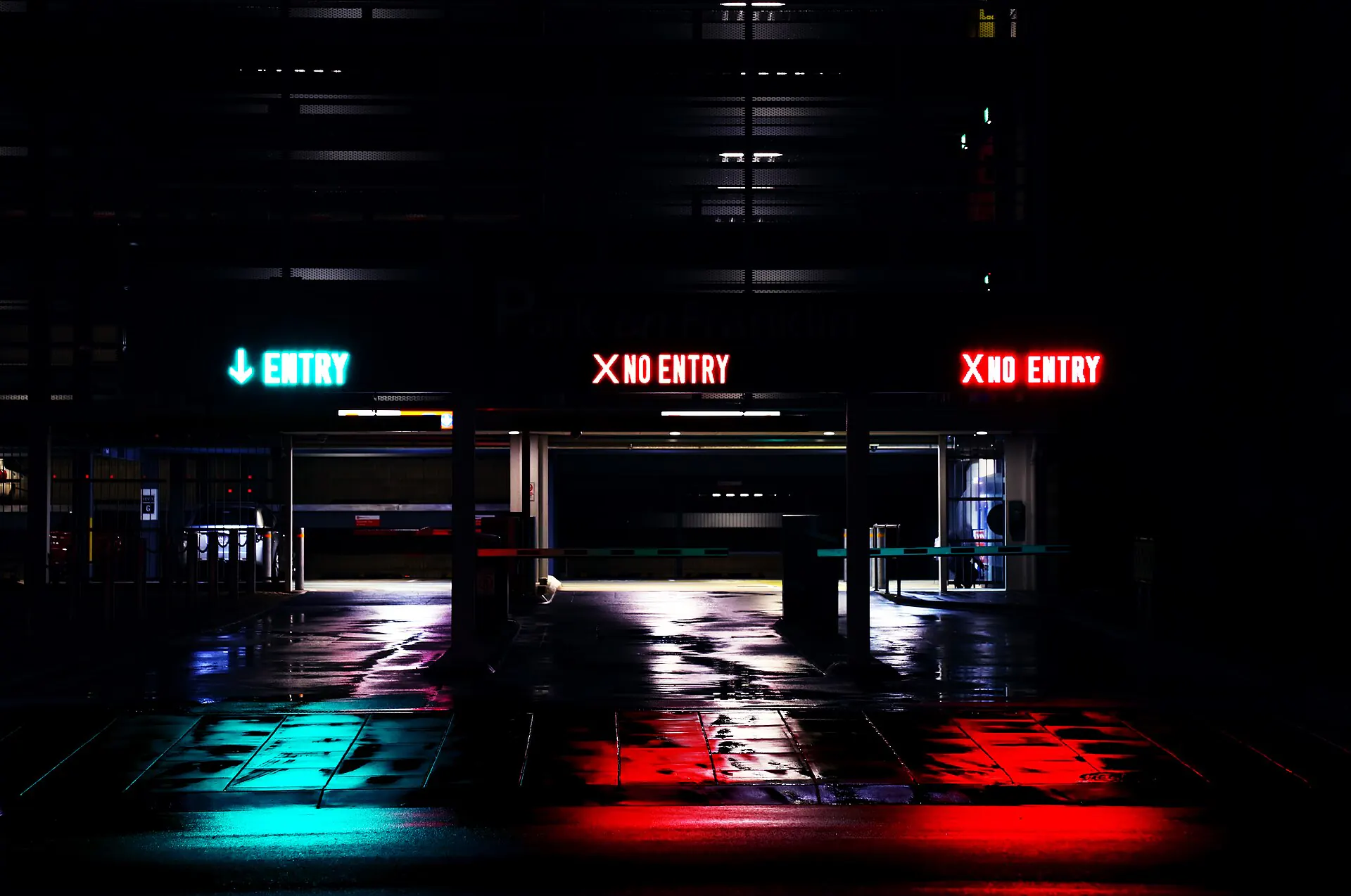
Where the car spends its nights is the first fleet decision. Photo: Mike Wilson, CC0.
The short answer
Fleet management is the work around the driving: charging, cleaning, inspections, tires, damage repair, overnight parking, recovering a stuck car, and insurance. Tesla's reported Cybercab terms cover some maintenance and leave the rest with the owner. Owners can run it themselves, pay a software fee plus a price per visit, pay a depot a stall fee plus a percentage of fares, or pay one all-in flat fee.
What Tesla's terms leave with the owner
Tesla opened invite-only Cybercab orders on November 13, 2026, and press outlets quoted the order page that day and the Autonomy Subscription Agreement the next day. We have not read the agreement ourselves, so everything in this table is reported.
| Covered by the $299 subscription | Certain maintenance items, such as tires, windshields, filters and camera cleaning, and limited towing (reported) |
|---|---|
| The owner's job | Insurance, registration, charging, parking and general cleaning |
| Required to operate | An active subscription and regular maintenance |
| Ride-hailing or rental use | Only with separate written authorization from Tesla |
| Wraps, tint, wheels | Through Tesla or an authorized provider |
| Where it can drive | Tesla's service areas, which Tesla may change at any time |
| Subscription price | Can change with one month's notice |
The ride-hailing line matters most. As of November 14, 2026, an owner cannot put a Cybercab to paid work without Tesla's written permission. In October, before personal Cybercab orders opened, Ashok Elluswamy, Tesla's vice president of AI software, said on the earnings call that the first customer-owned cars could join Tesla's Robotaxi fleet "somewhere around Q2 next year," answering a question about customer cars generally. Tesla has not given a date for owner Cybercabs. Until then, this is planning, not operating.
The jobs, one by one
Charging
A car earning fares has to recharge during slow hours and come back to service on its own. That means a charger it can reach without a person plugging it in, or a person on site who does. Charging is on the owner under the reported terms, so the questions are where, at what electricity rate, and who handles a failed session at 3 a.m.
Cleaning and lost items
A shared car gets dirty fast: crumbs, spills, the occasional rider who gets sick. General cleaning is the owner's job under the reported terms. Someone also has to return a forgotten phone or bag, which means a person who can meet the car.
Inspections and readiness
Before a car goes back into service, someone should check the cabin for damage and leftover items and the outside for anything a camera may have missed. Tesla's terms require regular maintenance; how often a human walk-around happens is up to the owner.
Tires, glass and sensors
Reports say the subscription covers tires, windshields, filters and camera cleaning. That covers the parts. It does not tell you who drives the car to service or how long it sits out of rotation, so ask Tesla how service appointments work before you count on it.
Damage and repairs
Curb rash, a door ding in a parking lot, a cabin screen a rider breaks. The reported terms do not say who pays for damage beyond the covered items, so assume repairs, and the downtime they cause, are the owner's until Tesla says otherwise.
Parking
The car needs somewhere to wait between rides and to sleep at night, inside or near a service area. Parking is on the owner. A home driveway works for one car if the home sits inside a service area; more cars need a lot, a garage or a depot.
Roadside recovery
Reports say Tesla can remotely place the car in a "safe state." A car stopped safely is still a car stopped in traffic, and someone has to reach it if it cannot move on its own. Reports say the subscription includes limited towing, but not how quickly a tow arrives or who goes to a car stopped mid-ride.
Insurance
The owner pays for insurance under the reported terms. Rules vary by state. In Florida, Statute 627.749 requires at least $1 million in primary liability coverage for death, bodily injury and property damage, plus personal injury protection and uninsured and underinsured vehicle coverage as required by Florida law, whenever a fully autonomous vehicle with its automated driving system engaged is logged on to an on-demand autonomous vehicle network or giving a prearranged ride. The owner's policy, the network's, or both can meet it.
Four ways to get it done
Every setup splits the same jobs differently. None is right for everyone, and none is running privately owned Cybercabs yet, since owners cannot join Tesla's network today.
- Run it yourself. You charge, clean and fetch the car. It costs the least in cash and the most in hours, and it works best for one car parked at home inside a service area.
- Software plus pay per visit. You pay a monthly software fee per car and buy services one job at a time: each routine visit and each service stop is billed, and parking and charging cost extra. You pay only for the jobs you book, but arranging parking and charging stays your job.
- Depot plus percentage. The car lives in an assigned stall at a staffed site with charging, cleaning and incident response, for a monthly stall fee plus a percentage of its ride revenue. Parts and repairs are billed separately. Ask what the percentage is taken from: gross fares, or fares after the network's cut. DockDuty sells this model, so read this line knowing that. DockDuty does not operate a depot yet; its first, in Orlando, is targeted for Q4 2026 or Q1 2027.
- All-in flat fee. One fixed monthly bill per car, with parking, charging, cleaning and routine servicing inside it up to set caps. Predictable, but you pay the same in a slow month, and usage past the caps costs extra.
The running-cost calculator prices all four side by side, with every rate and formula shown.
What to ask any provider
- Is your site inside a Tesla service area, and what happens to my car if Tesla moves the boundary?
- Do you have Tesla's authorization to operate owner cars, or are you waiting on it like everyone else?
- Which of the jobs above are included, which are capped, and what does each extra cost?
- When my car stops in traffic, who goes, and how long does it take them to reach it?
- Whose insurance covers the car while it is in your care, and can I see the certificate?
- How many owner cars are you managing today?
For the operators already running robotaxi fleets of their own, see who runs robotaxis in the US. For what an owner might earn once all this is paid for, see how a Cybercab could make money, and for the car itself, what a Cybercab costs.
Questions
Does Tesla manage a Cybercab for its owner?
Partly. Reported order terms say the $299 monthly subscription covers some maintenance, such as tires, windshields, filters and camera cleaning, and limited towing (reported), while the owner stays responsible for insurance, registration, charging, parking and general cleaning.
Can I put my Cybercab on the Tesla Robotaxi network today?
Not without Tesla's written authorization, according to reports on the order terms published November 14, 2026. In October, before personal Cybercab orders opened, Tesla's AI chief said the first customer-owned cars could join the Robotaxi fleet somewhere around Q2 2027, answering a question about customer cars generally. Tesla has not given a date for owner Cybercabs.
What insurance does a robotaxi need in Florida?
Florida Statute 627.749 requires at least $1 million in primary liability coverage for death, bodily injury and property damage, plus personal injury protection and uninsured and underinsured vehicle coverage as required by Florida law, whenever a fully autonomous vehicle with its automated driving system engaged is logged on to an on-demand autonomous vehicle network or giving a prearranged ride.
Is a percentage fee or a flat or per-visit fee better?
Neither in general. A percentage fee costs less in slow months and more in busy ones; flat and per-visit fees roughly do the opposite. Which wins depends on your fares, which nobody can know until Tesla publishes owner terms. The running-cost calculator shows where the fees cross over for your numbers.
Sources
- Teslarati, November 14, 2026, Cybercab ownership fine print (reported): teslarati.com
- Electrek, November 14, 2026, Cybercab Autonomy Subscription Agreement terms (reported): electrek.co
- Electrek, November 13, 2026, order terms and service-area limit (reported): electrek.co
- Tesla Q3 2026 earnings call transcript, October 2026 (customer cars generally around Q2 2027): fool.com
- The 2026 Florida Statutes, section 627.749, autonomous vehicle insurance: leg.state.fl.us
- DockDuty's own operating status as of November 14, 2026: no depot open and no customer vehicle in its care; first depot, in Orlando, targeted for Q4 2026 or Q1 2027: dockduty.com